
What Is Astro Tourism in Costa Rica?
Astro tourism in Costa Rica is an emerging travel experience centered around observing and appreciating the night sky. Instead of exploring a destination only during daylight hours, travelers are discovering the landscapes, wildlife, and atmosphere that appear after sunset.
Costa Rica is already known for its rainforests, beaches, biodiversity, and outdoor experiences. But there is another side of the country that becomes visible at night.
As the sun disappears, the landscape changes. Tropical sounds become more noticeable, temperatures become cooler, and the sky becomes an attraction in its own right.
For travelers looking for something different from traditional sightseeing, astro tourism creates an opportunity to experience Costa Rica from another perspective.
Why Is Stargazing Becoming a Travel Experience?
Travel has traditionally focused on what people can see during the day. Beaches, waterfalls, forests, viewpoints, and cultural attractions dominate most itineraries.
Night tourism introduces a different rhythm.
Instead of asking what to visit next, travelers can simply look upward. Stargazing requires patience and attention. It encourages visitors to spend more time in one place rather than constantly moving between attractions.
This is part of what makes astronomy travel appealing. The experience does not necessarily require an elaborate itinerary. A clear evening, a comfortable outdoor space, and an unobstructed view of the sky can become a memorable part of a vacation.
The experience can also feel highly personal. Everyone sees the same stars, but each person experiences the moment differently.
Costa Rica After Dark
Costa Rica’s natural environment does not disappear after sunset. It changes.
The sounds of insects, frogs, birds, and other nocturnal animals create a completely different atmosphere. The rainforest becomes quieter in some places and more active in others.
For visitors staying near the Caribbean coast, nighttime can offer another opportunity to appreciate the tropical environment.
The combination of warm air, vegetation, ocean sounds, and a dark sky can create an atmosphere that feels completely different from the daytime beach experience.
This is one reason travelers are beginning to see nighttime as an important part of the destination rather than simply the end of the day.
The Caribbean Coast Offers a Different Kind of Night
The Caribbean coast of Costa Rica is known for its lush vegetation and connection to the ocean. At night, these elements become part of a different sensory experience.
Near Punta Uva, the combination of tropical surroundings and the Caribbean atmosphere creates opportunities to slow down after sunset.
At awā Beach, the natural environment remains an important part of the experience after dark. Guests can enjoy the peaceful surroundings of the property while listening to the sounds of the tropical landscape.
The Garden View Standard Suite and Garden View Superior Suite provide comfortable spaces surrounded by tropical greenery.
For a more immersive jungle atmosphere, the Master Jungle Suite and Exclusive Jungle Suite allow guests to remain closely connected to the surrounding landscape.
The experience changes again when the ocean becomes part of the setting. The Ocean View Master Suite, Ocean View Premium Suite, and Ocean View Superior Suite offer guests a coastal perspective that can be especially atmospheric as daylight fades.
You Do Not Need to Be an Astronomer
One of the best things about astro tourism is that you do not need to understand astronomy to enjoy it.
You do not need a telescope, specialized equipment, or extensive knowledge of constellations.
Simply observing the night sky can be fascinating. Travelers can look for bright stars, identify familiar constellations, observe the Moon, or use a basic astronomy application to understand what they are seeing.
For beginners, the experience is less about identifying every object in the sky and more about developing curiosity.
A few minutes of looking upward can reveal how much of the night sky is normally hidden by city lights and indoor routines.
The Importance of Dark Skies
Darkness is an essential part of astronomy travel.
Artificial light can make it difficult to see stars and other celestial objects. Urban environments often produce enough light pollution to obscure much of the night sky.
This is why destinations surrounded by natural areas can provide a different experience.
Travelers interested in astro tourism should look for places with limited artificial lighting, open views, and minimal visual obstruction.
Responsible nighttime lighting can also benefit local ecosystems. Excessive artificial light can affect nocturnal wildlife, insects, and other natural behaviors.
For this reason, enjoying the night sky and protecting natural darkness can go hand in hand.
Astro Tourism and Nature Travel
Astro tourism fits naturally into Costa Rica’s broader nature travel experience.
During the day, travelers may explore forests, beaches, rivers, or nearby communities. After sunset, the same destination reveals another dimension.
This creates a more complete experience of place.
Instead of viewing nature as something that exists only between sunrise and sunset, travelers begin to understand that ecosystems operate continuously.
Nocturnal wildlife, changing temperatures, sounds, moonlight, and stars all contribute to the character of a destination.
For travelers staying at awā Beach, the amenities provide opportunities to create a comfortable stay while remaining connected to the surrounding tropical environment.
The Moon Can Be Part of the Experience
Stargazing does not always mean looking for the darkest possible sky.
The Moon itself can become an attraction.
A bright full Moon can illuminate tropical vegetation and create a completely different atmosphere along the coast. During other phases, darker skies may reveal more stars.
Planning a trip around different lunar phases can therefore create different nighttime experiences.
A moonlit evening near the Caribbean can feel almost completely different from a moonless night filled with stars.
This gives travelers another reason to slow down and pay attention to the natural cycles happening around them.
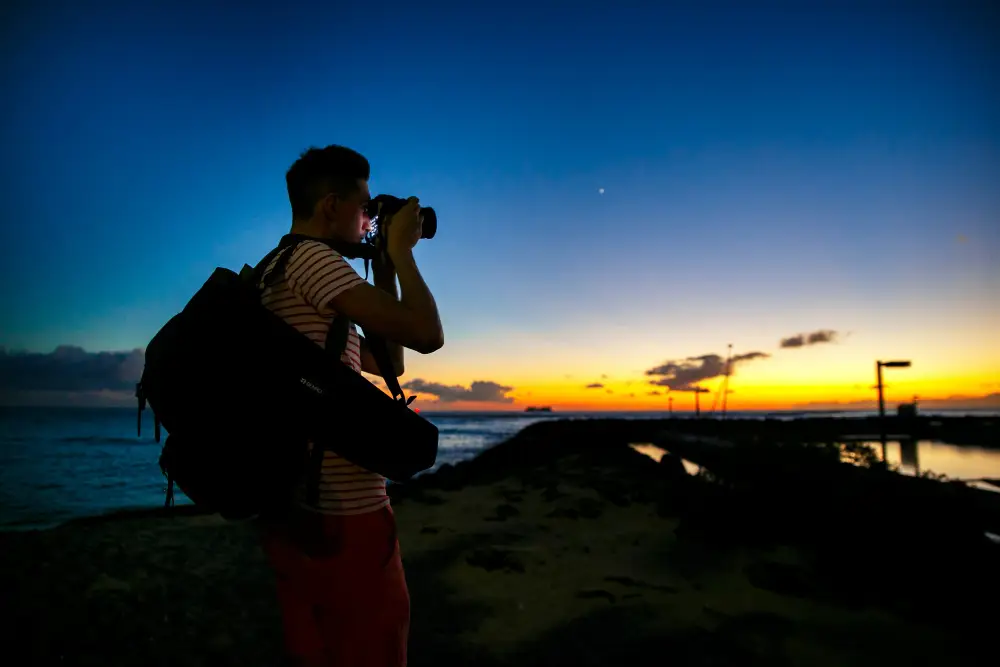
Night Photography in Costa Rica
Astro tourism can also appeal to travelers interested in photography.
Night photography creates opportunities to capture landscapes in ways that are impossible during daylight.
The combination of stars, tropical vegetation, silhouettes, moonlight, and the ocean can create striking compositions.
However, photographers should prioritize the environment over the photograph. Avoid disturbing wildlife, entering restricted areas, using excessive lighting, or damaging vegetation to create a particular composition.
A good night photograph should document the landscape without compromising it.
For casual travelers, even a smartphone can be enough to experiment with nighttime photography. For more serious photographers, a tripod and camera with manual controls can open up additional possibilities.
A Different Way to Experience Costa Rica
One of the most interesting aspects of astro tourism is that it changes the pace of a vacation.
Many travel itineraries are designed around maximizing daylight. Visitors wake up early, visit several attractions, eat quickly, and move on to the next destination.
A night sky experience encourages the opposite.
You stay still.
You wait.
You observe.
You listen.
That slower rhythm can make the destination feel more immersive.
A tropical evening does not need to be filled with entertainment. Sometimes the most memorable part of a night is simply sitting outside and noticing what happens when the landscape becomes quiet.
Responsible Stargazing Matters
Enjoying the night sky should always be compatible with protecting the environment.
Travelers should avoid using bright flashlights unnecessarily, disturbing wildlife, entering protected areas without authorization, or leaving waste behind.
If a guided astronomy or nighttime nature experience is available, choosing an experienced local provider can make the experience more informative and responsible.
Visitors should also follow local recommendations about beaches, trails, wildlife areas, and nighttime access.
Nature at night can be more sensitive than it appears. Respecting boundaries helps ensure that nighttime experiences remain available for future visitors without disturbing the ecosystems that make them possible.
Why Astro Tourism Fits the Future of Travel
Astro tourism reflects a broader change in the way people are discovering destinations.
Travelers are increasingly interested in experiences rather than simply checking attractions off a list. They want activities that feel distinctive, immersive, and connected to the place they are visiting.
The night sky offers exactly that.
It is free from traditional tourist infrastructure. It does not require a large attraction or an elaborate entertainment program. It simply asks travelers to look at something that has existed long before modern tourism.
This simplicity can be part of its appeal.
In Costa Rica, where nature is already central to the travel experience, adding the night sky creates another layer of discovery.
How to Add Astro Tourism to a Costa Rica Vacation
Adding stargazing to a Costa Rica itinerary does not require changing your entire trip.
Choose at least one evening when you can stay outdoors after sunset. Find a location with limited artificial light and an unobstructed view of the sky.
Check the weather forecast and consider the Moon phase if observing stars is your main goal.
Bring a comfortable layer for the evening, insect protection appropriate for the environment, and a red light or dim flashlight if you need illumination. Red light can help preserve night vision better than bright white light.
Most importantly, give yourself time.
The first few minutes may not reveal much. As your eyes adjust to darkness, more stars can become visible.
That gradual discovery is part of the experience.
From Daylight Adventures to Nighttime Discovery
Costa Rica offers travelers an extraordinary variety of daytime experiences. But the country does not stop being interesting when the sun goes down.
Astro tourism invites visitors to discover another side of the destination.
The stars, Moon, tropical sounds, ocean, and nighttime landscape create an experience that cannot be replicated during the day.
For travelers staying on the Caribbean coast, this can add a quiet and memorable dimension to a tropical vacation.
At awā Beach, guests can experience the transition from daylight to evening while surrounded by the natural environment of Punta Uva.
The result is not simply another activity to add to an itinerary. It is a different way of experiencing the destination.
The Future of Astro Tourism in Costa Rica
Astro tourism has the potential to become an increasingly interesting part of Costa Rica’s nature travel landscape.
As travelers search for experiences that feel more personal and less conventional, the night sky offers an attraction that is both ancient and constantly changing.
It connects science, nature, photography, culture, and simple curiosity.
For Costa Rica, the opportunity is particularly meaningful because protecting natural landscapes can also help preserve the darkness that makes nighttime experiences possible.
The future of travel may not always be about seeing more places.
Sometimes, it may be about seeing more of the place you are already in.
And sometimes, that means simply looking up.
Frequently Asked Questions (FAQ)
What is astro tourism in Costa Rica?
Astro tourism in Costa Rica is travel focused on experiencing and observing the night sky. It can include casual stargazing, astronomy experiences, night photography, Moon observation, and guided activities related to astronomy.
Is Costa Rica good for stargazing?
Costa Rica can offer interesting stargazing opportunities, particularly in areas away from strong artificial lighting. Weather, cloud cover, the Moon phase, and local conditions can influence what travelers see on any particular night.
Can I enjoy astro tourism without a telescope?
Yes. A telescope is not necessary for casual stargazing. Travelers can observe the Moon and stars with the naked eye and use astronomy applications to identify celestial objects.
What is the best time to go stargazing?
The best time depends on the weather, Moon phase, and local conditions. Nights with clearer skies and less moonlight can make more stars visible.